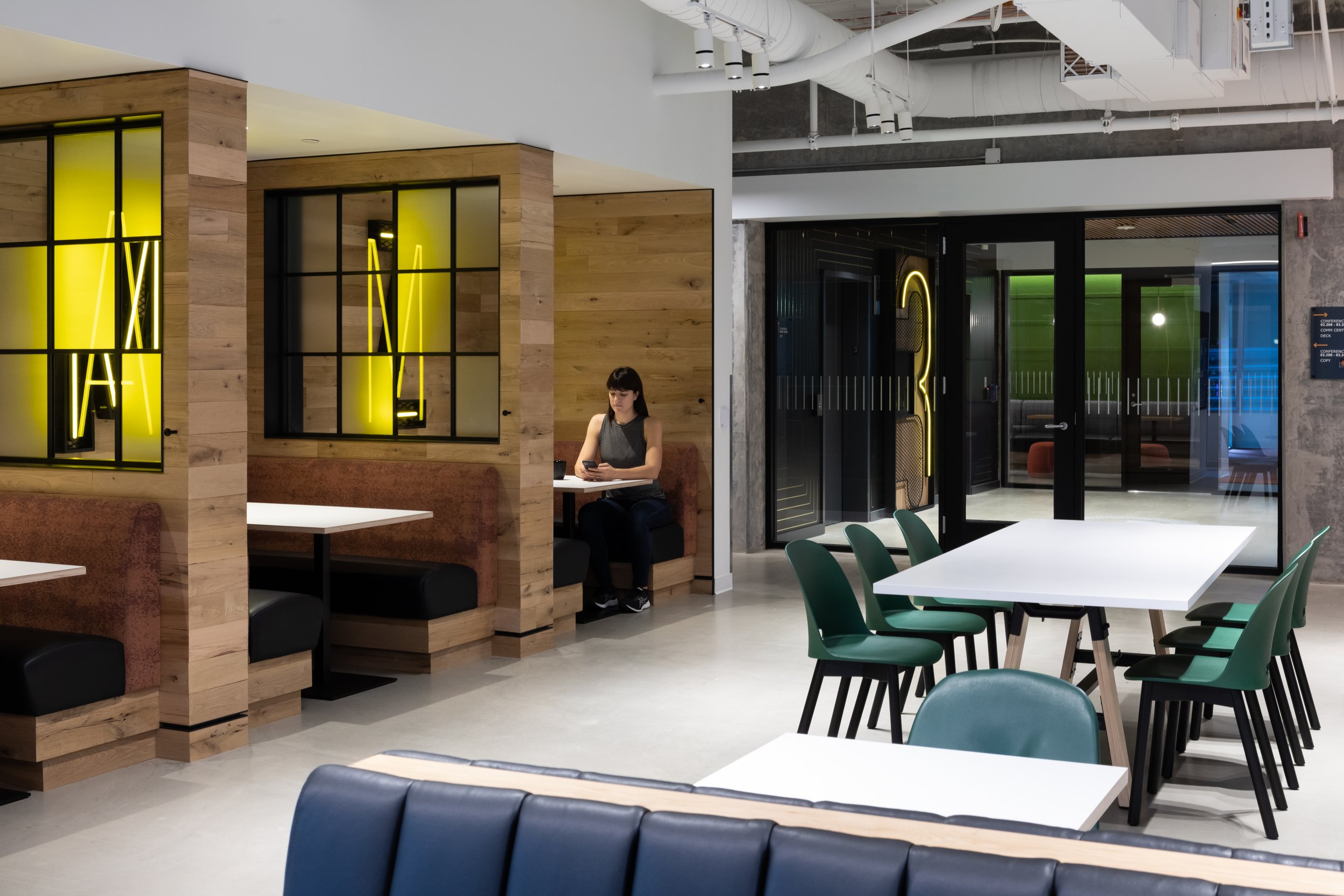
Interior Design
This body of work reflects an early but critical phase of my practice—where interior design became a way to understand how organizations function through space.
Across workplace, academic, diplomatic, and residential contexts, the focus was not only on spatial resolution, but on translating complex programmatic and behavioral needs into coherent environments.
Design Intent
Rather than approaching interiors as isolated aesthetic exercises, this work was grounded in the relationship between spatial decisions and organizational behavior.
Material Systems + Environmental Language
Developing material strategies that respond to context, culture, and use—balancing durability, tactility, and experience.
Spatial Programming + Translation
Interpreting user needs, operational requirements, and institutional goals into spatial frameworks that support flow, flexibility, and clarity.
Coordination + Integration
Working within architectural teams to ensure interior systems align with broader building logic, technical constraints, and design intent.
Furniture + Environmental Composition
Curating FF&E strategies that support both functional performance and experiential quality across varied program types.
EVOLVING PERSPECTIVE
This phase of work marked the beginning of a shift in focus—from designing interiors as finished environments toward understanding them as expressions of organizational systems, behavior, and decision-making.
Outcome
Across these projects, interior design functioned as a foundational practice in spatial reasoning—developing the ability to translate complex, often competing requirements into coherent environments.
This work directly informed an expanded focus on systems thinking, participatory strategy, and the role of design in shaping organizational behavior.